Friday, June 15, 2007

"Honour Killing" — get a fucking grip men


This particular type of violence to women is very specific:
Its amongst groups of displaced people from, and for instance, Kurdish and Pakistani refugees in England.
This type of violence mainly comes about out of a fear of loss of identity in a strange land. But another thing that is coming out, is the ferocity of Clan loyalty, or Tribal loyalty and caste.
I grew up in a Pakistani neighbourhood in the 70's and could not discern this tradition, all I can put it down to is that the longer a conservative culture is surrounded by another, the more the 'need' to preserve the roots.
But, because of a Police Force in the seventies that was notorius for its racism, recent efforts to bring the police back in line has had the effect of not wanting to take on these cases out of racial sensitivity.
That aside, this whole idea of 'Honour Killing' is ridiculous, for instance these ones:
So you didn't like her boyfriend.....the answer was obvious, kill your own beautiful daughter.

How on earth is that rational?


http://www.guardian.co.uk/crime/article/0,,2100800,00.html

http://www.guardian.co.uk/crime/article/0,,2101550,00.html

Thursday, June 07, 2007

Finished with War: A Soldier's Declaration

I am making this statement as an act of wilful defiance of military authority, because I believe that the war is being deliberately prolonged by those who have the power to end it.
I am a soldier, convinced that I am acting on behalf of soldiers. I believe that this war, upon which I entered as a war of defence and liberation, has now become a war of aggression and conquest. I believe that the purposes for which I and my fellow soldiers entered upon this war should have been so clearly stated as to have made it impossible to change them, and that, had this been done, the objects which actuated us would now be attainable by negotiation.
I have seen and endured the sufferings of the troops, and I can no longer be a party to prolong these sufferings for ends which I believe to be evil and unjust.
I am not protesting against the conduct of the war, but against the political errors and insincerities for which the fighting men are being sacrificed.
On behalf of those who are suffering now I make this protest against the deception which is being practiced on them; also I believe that I may help to destroy the callous complacence with which the majority of those at home regard the continuance of agonies which they do not share, and which they have not sufficient imagination to realise.

Siegfried Sassoon
July 1917

Monday, May 14, 2007

Real Punks are politikal!

I heard someone saying recently that the British have a surprisingly different reaction to music compared to every other country: Lots of other places love film, or theatre, but we Brits are obsessed with the language of noise, it can be anything, but it has to have that feeling. I hadn't really thought about it before, but whoever said it is bang-on. Some Continental peoples get it, but in a theatrical context or elsewhere, wheras we absorb music in such an obsessively different way, there's something to what he said.
Lyrics for The Slits' classic from their Dub/Punk recording "Cut"
Are wildly hip, high, and clear enough to still be resonant.


TYPICAL GIRLS

Don't create...
Don't rebel...

Typical girls get upset to quickly
Typical girls can't control themselves
Typical girls are so confusing
Typical girls you can always tell
Typical girls don't think too clearly
Typical girls are unpredictable

(chorus)
Typical girls try to be
Typical girls very well
Typical girls try to be
Typical girls very well

Typical girls are looking for something
Typical girls fall under spells
Typical girls buy magazines
Typical girls feel like hell
Typical girls worry about spots, fat...natural smells
Taking fake smells

(chorus)

Don't create...
Don't rebel...

Can't decide what clothes to wear
Are sensitive
Typical girls are emotional
Typical girls are cruel and bewitching
Oh she's a femme fatale
Typical girls stand by their man
Typical girls are really swell
Typical girls learn how to act shocked
Typical girls...don't rebel

Who invented the typical girl?
Who's bringing out the new improved one?
And there's another marketing ploy
Typical girl gets the typical boy

Typical boy gets the typical girl
The typical girl gets the typical boy
Typical boy gets the typical girl
The typical girl gets the typical boy
Are emotional

Thursday, May 10, 2007

Fuck you Blair

So, you are finally 'stepping down' after announcing more than a year ago that he won't be running for a fourth term (if you wanted to go, just go). How can we forget his slavish support for George W Bush. Class-wise, I was totally shocked that Blair was even chosen as a party leader in 1994 especially as a leader of the traditionally industrial working class party, HIM of a privileged private-school!

I have always felt sick at the idea of voting for this person, he has never had my sympathy, he is a huge conman.

"I believe"
I don't care what you BELIEVE: logic, facts, and ideas should be kept seperate, and never ever mixed because when they are, it is bound to end in pain and death. What he 'believes' has nothing to do with reality. How dare you try to sell that to us.

"My Legacy"
What he should've realised is that we simply don't care what you want us to remember you for. Oh yeah invading a tyrannical country, despite being a tyranny it was no direct "threat" to us, and that had no weapons left. Yes, His Legacy as a warmongerer. Go fuck yourself!!

"History will forgive us"
In a Hegelian way, perhaps it will forgive you, just like the millions killed during the Sovet era could be simply known as "History". Historicism is one of the most chilling ways to look at our lives, and it doesn't 'tidy' anything neatly up.

Hegel was known for Sophistry, his idea of Historicism, and his dialectics . . . .So?:
What happened was that he had created a toolkit to allow for the amazing influence of Marxism, which was inspiring, but a system that was flawed by the foggyness of Hegel — that he still has a grip on modern politics is a terrible trap.

Sunday, May 06, 2007

Hooray for Ségolène Royal

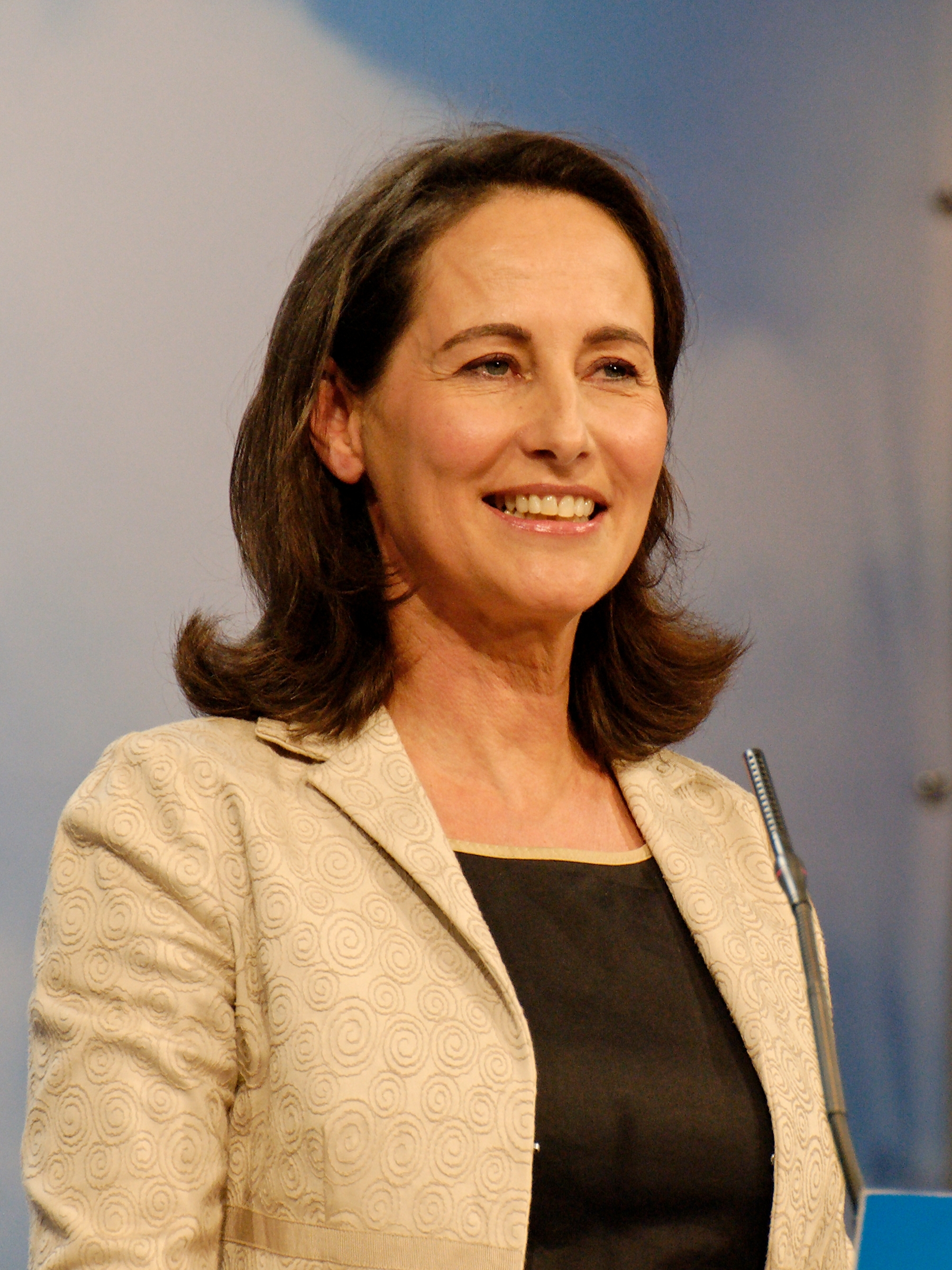
Today is finally the time that Fance will vote, it seems to be a long time coming — they've been revving-up for ages. It might not seem too earth-shattering to some, but I'm rooting for Ségolène Royal. I am very impressed by the way she behaves. And the fact that she's a woman is important: I'm turned-off by the very french chauvinism that normally is overwhelming from France. The best things about her are She's not a dinosaur, and she is gorgeous! Compare her with the opposition: Nicolas Sarkozy, a racist rightwinger cliche-male.

So, come on Ségo !

Saturday, May 05, 2007

An Imperative Meme

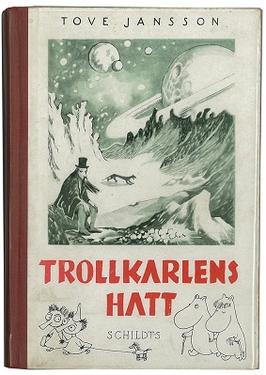
I have been tagged to say which books influenced me (well, that's how interpret this phrase). So, the two that became me, the two that inspired me are "Mathematical Models" by a pair of educators from the 1950's called Cundy and Rollet, and the first Moomin book by Tove Jansson, "Finn Family Moomintroll":

I love Tove's pen and ink drawings — and I learned to read because I was so intrigued by what the pictures suggested. And her outlook is so pleasing (in fact I have worn out three copies of this, mainy because English bookbinding was so poor).

The probably surprising other choice is Cundy and Rollet's Mathematical Models comes from a masterstroke by my Dad, he noticed that my maths were falling behind the school's trammelled and classist expectations of us the 'bottom group of the year'. The first I made was a dodecahedron and I was just amazed:


(no silly joke should be made of by the fact that this shape is classed as a "Platonic Solid"!). I subsequently discovered the huge world of Archimedean
Duals, although my maths didn't improve, but I was suddenly empowered to make these purely wierd objects, and just the hypnotic pleasure of these crystaline objects — objects of perfection that I, I had made this!! The teachers behaved with utter disinterest and disdain that I was producing these more and more complicated models: from the 12 facets of a dodecahedron to the 72 facets or more of the more outlandish Polyhedra was not to be encouraged: Something I thought would have been the strangest and notable thing to them about me.

No curiosity, no "But why would this scrawny little oik be talking Greek to me?"
If I'd been their teacher I would have been fascinated to engage in his progress.

Thursday, April 26, 2007

Trees in springtime England


As promised, Beech trees!

Monday, April 23, 2007

St George's day

Its not just Taurus that I associate with, it is Shakespeare and a mysterious saint who was perhaps from Turkey:

Sunday, April 22, 2007

guardian teddies


This my version of Ikebana . . . . Happy Birthday to me . . . . Happy Birthday to me (tomorrow)!

Sunday, April 15, 2007

A hard month

15th March: go into hospital.

28th March: outa there!

15th April: still limping along...

today, there is no change for the better:

•Exhaustion
•No balance
•Indwelling catheter (makes my clothing so smelly, and uncomfortable), a temporary measure until 29th May operation for a Superpubic Catheter.
•Inability to concentrate on anything.
•My hands are barly able to sense movement or to be able to feel, with no accuracy.
•Speech is limited by this illness, and how fully interested others are.

All the while the boys from Duke are able to escape justice, they MUST be given a chance to reflect on their behavior, a prison is a good place to do this reflection.

And I must add, all the while the british press are moaning on about Iranian treatment of '0ur side' for venturing too far into Iran, mainly on about the fact there is 'human importance' about the idea that this team was headed by a woman. This 'news' blanked handily the current atrocities in Iraq : which need I add, have been created by the dogged support of britain of America's vile criminality.

Despite my MS, I will not forgive you Blair.

I'm not as easily distracted.

Monday, April 02, 2007

John Galsworthy and PEN


I recently read about John Galsworthy's life; rather than trawling through his epic Forsyte Saga which I remember being on British Telly when I was a child, mixing it up with the almost interchangeable (and the interminable?) "The Flambards" by K M Peyton, and god, lest I forget , the class obsessed "Upstairs, Downstairs" because they all had that period-drama ethic, the result made me weary -either that or wary- of the genre. It made these all these roughly coinciding Edwardian-era melodramas one long, big turn-off to me (well, I was a typical boy, please bear with me)....

I was generally so bored (is that the start of disgust?) that there was little focus on the catclysms of World War One if it ever did, it was fleetingly so, as described by The War Poets like Rupert Brooks and Wilfred Owen and a Comic magazine of the 70-80's (no, not that sort of comic[!], to borrow a crap running-joke from "Hotel New Hampshire") mainly of writer Pat Mills' and artist Joe Colquhoun's work for what I knew as 'Battle Action!', mainly because of the deeply touching Charley's War:


I think it is important to remember that the early-fascistic Art movement called Futurism was contemporary with Galsworthy's; the era couldn't be expressed more differently by the fetishistic exhilaration and addiction to 'Speed', the 'Fusing' of Man and Machine, and faux-revolutionary 'Iconoclasm' to the world of Forsyte.
Nowadays, the futurists are 'fondly remembered' for their 'eccentricities', what is forgotten is quite how awful the consequences, for instance, was what they were proposing really so dissimilar to a draft for the actual Nazi bombing of Guernica just a few years later? And then there's the closely related Modernist/Anti-Semitism of Wyndham Lewis and T S Eliot.

It is a relief to see that John Galsworthy didn't bury his head in the sand - unlike the originally patronising picture that I had as a youth of my elders:
He founded International PEN with Joseph Conrad, George Bernard Shaw, and HG Wells, to lobby for writers under threat of imprisonment, Orhan Pamuk is a recent case.

Now I'm much more tolerant of 'period dramas': rather than 'charmed' by the quaintness, the writing is just as relevant as it was — it astonishes me how the pressures applied by others on an individual are so damnably the same as now. How clearly this was percieved all the way back then is so impressive to me. The protagonists have become metaphors to us in the 21st century, yet the relevance is somehow constrained again, this time in an "Empire line frock".

But they always were.

Wednesday, March 28, 2007

Pay attention to the world

I have re-discovered Susan Sontag and I really miss a voice like hers....
Gladly I'm seeing that a project like her's does have listeners. This is long, but why on Earth should I pass myself off as an editor?

If only I'd read this sentence a few years earlier in my life, I will treasure this:

"Be serious . . . by which I mean never be cynical"


Pay attention to the world
by Susan Sontag


Long ago - it was the 18th century - a great and eccentric defender of literature and the English language - it was Doctor Johnson - wrote, in the preface to his Dictionary: "The chief glory of every people arises from its authors." An unconventional proposition, I suspect, even then. And far more unconventional now, though I think it's still true. Even at the beginning of the 21st century. Of course, I am speaking of the glory that is permanent, not transitory.

Article continues

I'm often asked if there is something I think writers ought to do, and recently in an interview I heard myself say: "Several things. Love words, agonize over sentences. And pay attention to the world."
Needless to say, no sooner had these perky phrases fallen out of my mouth than I thought of some more recipes for writer's virtue.

For instance: "Be serious." By which I meant: never be cynical. And which doesn't preclude being funny.

And ... if you'll allow me one more: "Take care to be born at a time when it was likely that you would be definitively exalted and influenced by Dostoyevsky, and Tolstoy, and Turgenev, and Chekhov."

A great writer of fiction both creates - through acts of imagination, through language that feels inevitable, through vivid forms - a new world, a world that is unique, individual; and responds to a world, the world the writer shares with other people but is unknown or mis-known by still more people, confined in their worlds: call that history, society, what you will.

But of course, the primary task of a writer is to write well. (And to go on writing well. Neither to burn out nor to sell out.) To write is to know something. What a pleasure to read a writer who knows a great deal. (Not a common experience these days ... ) Literature, I would argue, is knowledge - albeit, even at its greatest, imperfect knowledge. Like all knowledge.

Serious fiction writers think about moral problems practically. They tell stories. They narrate. They evoke our common humanity in narratives with which we can identify, even though the lives may be remote from our own. They stimulate our imagination. The stories they tell enlarge and complicate - and, therefore, improve - our sympathies. They educate our capacity for moral judgment.

When I say the fiction writer narrates, I mean that the story has a shape: a beginning, a middle (properly called a development), and an end or resolution. Every writer of fiction wants to tell many stories, but we know that we can't tell all the stories - certainly not simultaneously. We know we must pick one story, well, one central story; we have to be selective. The art of the writer is to find as much as one can in that story, in that sequence ... in that time (the timeline of the story), in that space (the concrete geography of the story). "There are so many stories to tell," muses the alter ego voice in the monologue that opens my last novel, In America. "There are so many stories to tell, it's hard to say why it's one rather than another, it must be because with this story you feel you can tell many stories, that there will be a necessity in it; I see I am explaining badly ... It has to be something like falling in love. Whatever explains why you chose this story hasn't explained much. A story, I mean a long story, a novel, is like an around-the-world-in-eightydays: you can barely recall the beginning when it comes to an end."

A novelist, then, is someone who takes you on a journey. Through space. Through time. A novelist leads the reader over a gap, makes something go where it was not.

There is an old riff I've always imagined to have been invented by some graduate student of philosophy (as I was once myself), late one night, who had been struggling through Kant's abstruse account in his Critique of Pure Reason of the barely comprehensible categories of time and space, and decided that all of this could be put much more simply.

It goes as follows:

"Time exists in order that everything doesn't happen all at once ... and space exists so that it doesn't all happen to you."

By this standard, the novel is an ideal vehicle both of space and of time. The novel shows us time: that is, everything doesn't happen at once. (It is a sequence, it is a line.) It shows us space: that is, what happens doesn't happen to one person only.

In other words, a novel is the creation not simply of a voice but of a world. It mimics the essential structures by which we experience ourselves as living in time, and inhabiting a world, and attempting to make sense of our experience. But it does what lives (the lives that are lived) cannot offer, except after they are over. It confers - and withdraws - meaning or sense upon a life. This is possible because narration is possible, because there are norms of narration that are as constitutive of thinking and feeling and experiencing as are, in the Kantian account, the mental categories of space and time.

In other words - and once again - the novel tells a story. I don't mean only that the story is the content of the novel, which is then deployed or organized into a literary narrative according to various ideas of form. I am arguing that having a story to tell is the chief formal property of a novel; and that the novelist, whatever the complexity of his or her means, is bound by - liberated by - the fundamental logic of storytelling.

The essential scheme of storytelling is linear (even when it is antichronological). It proceeds from a "before" (or: "at first") to a "during" to a "finally" or "after". But this is much more than mere causal sequence, just as lived time - which distends with feeling and contracts with the deadening of feeling - is not uniform, clock time. The work of the novelist is to enliven time, as it is to animate space.

The dimension of time is essential for prose fiction, but not, if I may invoke the old idea of the two-party system in literature, for poetry (that is, lyric poetry). Poetry is situated in the present. Poems, even when they tell stories, are not like stories.

One difference lies in the role of metaphor, which, I would argue, is necessary in poetry. Indeed, in my view, it is the task - one of the tasks - of the poet to invent metaphors. One of the fundamental resources of human understanding is what could be called the "pictural" sense, which is secured by comparing one thing with another. Here are some venerable examples, familiar (and plausible) to everyone:

time as river flowing
life as dream
death as sleep
love as illness
life as play/stage
wisdom as light
eyes as stars
book as world
human being as tree
music as food
etc, etc

A great poet is one who refines and elaborates the great historical store of metaphors and adds to our stock of metaphors. Metaphors offer a profound form of understanding, and many - but hardly all - novelists have recourse to metaphor. The grasp of experience through metaphor is not the distinctive understanding that is offered by the great novelists. Virginia Woolf is not a greater novelist than Thomas Bernhard because she uses metaphors and he does not.

The understanding of the novelist is temporal, rather than spatial or pictural. Its medium is a rendered sense of time - time experienced as an arena of struggle or conflict or choice. All stories are about battles, struggles of one kind or another, that terminate in victory and in defeat. Everything moves toward the end, when the outcome will be known.

"The modern" is an idea, a very radical idea, that continues to evolve. We are now in a second phase of the ideology of the modern (which has been given the presumptuous name of "the postmodern"). This beginning of "the modern" in literature took place in the 1850s. A century and a half is a long time. Many of the attitudes and scruples and refusals associated with "the modern" in literature - as well as in the other arts - have begun to seem conventional or even sterile. And, to some extent, this judgment is justified. Every notion of literature, even the most exacting and liberating, can become a form of spiritual complacency or self-congratulation.

Most notions about literature are reactive - in the hands of lesser talents, merely reactive. But what is happening in the repudiations advanced in the current debate about the novel goes far beyond the usual process whereby new talents need to repudiate older ideas of literary excellence.

In North America and in Europe, we are living now, I think it fair to say, in a period of reaction. In the arts, it takes the form of a bullying reaction against the high modernist achievement, which is thought to be too difficult, too demanding of audiences, not accessible (or "user-friendly") enough. And in politics, it takes the form of a dismissal of all attempts to measure public life by what are disparaged as mere ideals.

In the modern era, the call for a return to realism in the arts often goes hand in hand with the strengthening of cynical realism in political discourse.

The greatest offense now, in matters both of the arts and of culture generally, not to mention political life, is to seem to be upholding some better, more exigent standard, which is attacked, both from the left and the right, as either naive or (a new banner for the philistines) "elitist".

Proclamations about the death of the novel - or in its newer form, the end of books - have, of course, been a staple of the debate about literature for almost a century. But they have recently attained a new virulence and theoretical persuasiveness.

Ever since word-processing programs became common place tools for most writers - including me - there have been those who assert that there is now a brave new future for fiction.

The argument goes as follows.

The novel, as we know it, has come to its end. However, there is no cause for lament. Something better (and more democratic) is going to replace it: the hypernovel, which will be written in the nonlinear or nonsequential space made possible by the computer.

This new model for fiction proposes to liberate the reader from the two mainstays of the traditional novel: linear narrative and the author. The reader, cruelly forced to read one word after another to reach the end of a sentence, one paragraph after another to reach the end of a scene, will rejoice to learn that, according to one account, "true freedom" for the reader is now possible, thanks to the advent of the computer: "freedom from the tyranny of the line ". A hypernovel "has no beginning; it is reversible; we gain access to it by several entrances, none of which can be authoritatively declared to be the main one ". Instead of following a linear story dictated by the author, the reader can now navigate at will through an "endless expansion of words ".

I think most readers - surely, virtually all readers - will be surprised to learn that structured storytelling, from the most basic beginning-middle- end scheme of traditional tales to more elaborately constructed, nonchronological and multi-voiced narratives, is actually a form of oppression rather than a source of delight.

In fact, what interests most readers about fiction is precisely the story - whether in fairy tales, in murder mysteries, or in the complex narratives of Cervantes and Dostoyevsky and Jane Austen and Proust and Italo Calvino. Story - the idea that events happen in a specific causal order - is both the way we see the world and what interests us most about it. People who read for nothing else will read for plot.

Yet hyperfiction's advocates maintain that we find plot "confining" and chafe against its limitations. That we resent and long to be liberated from the age-old tyranny of the author, who dictates how the story will turn out, and wish to be truly active readers, who at any moment in reading the text can choose between various alternative continuations or outcomes of the story by rearranging its blocks of text. Hyper fiction is sometimes said to mimic real life, with its myriad opportunities and surprising outcomes, so I suppose it is being touted as a kind of ultimate realism.

To this, I would answer that, while it is true that we expect to organize and make sense of our lives, we do not expect to write other people's novels for them. And one of the resources we have for helping us to make sense of our lives, and make choices, and propose and accept standards for ourselves, is our experience of singular authoritative voices, not our own, which make up that great body of work that educates the heart and the feelings and teaches us to be in the world, that embodies and defends the glories of language (that is, expands the basic instrument of consciousness): namely, literature.

These proclamations that the book and the novel in particular are ending can't simply be ascribed to the mischief wreaked by the ideology that has come to dominate departments of literature in many major universities in the United States, Britain and western Europe. The real force behind the argument against literature, against the book, comes, I think, from the hegemony of the narrative model proposed by television.

A novel is not a set of proposals, or a list, or a collection of agendas, or an (open-ended, revisable) itinerary. It is the journey itself - made, experienced and completed.

Completion does not mean that everything has been told. Henry James, as he was coming to the end of writing one of his greatest novels, The Portrait of a Lady, confided to himself in his notebook his worry that his readers would think that the novel was not really finished, that he had "not seen the heroine to the end of her situation". (As you will remember, James leaves his heroine, the brilliant and idealistic Isabel Archer, resolved not to leave her husband, whom she has discovered to be a mercenary scoundrel, though there is a former suitor, the aptly named Caspar Goodwood, who, still in love with her, hopes she will change her mind.) But, James argued to himself, his novel would be rightly finished on this note. As he wrote: "The whole of anything is never told; you can only take what groups together. What I have done has that unity - it groups together. It is complete in itself."

We, James's readers, may wish that Isabel Archer would leave her dreadful husband for happiness with loving, faithful, honorable Caspar Goodwood: I certainly wish she would. But James is telling us she will not.

Every fictional plot contains hints and traces of the stories it has excluded or resisted in order to assume its present shape. Alternatives to the plot ought to be felt up to the last moment. These alternatives constitute the potential for disorder (and therefore of suspense) in the story's unfolding.

The pleasure of fiction is precisely that it moves to an ending. A novel is a world with borders. For there to be completeness, unity, coherence, there must be borders. Everything is relevant in the journey we take within those borders. One could describe the story's end as a point of magical convergence for the shifting preparatory views: a fixed position from which the reader sees how initially disparate things finally belong together.

There is an essential - as I see it - distinction between stories, on the one hand, which have, as their goal, an end, completeness, closure, and, on the other hand, information, which is always, by definition, partial, incomplete, fragmentary.

This parallels the contrasting narrative models proposed by literature and by television.

Literature tells stories. Television gives information.

Literature involves. It is the recreation of human solidarity. Television (with its illusion of immediacy) distances - immures us in our own indifference.

The so-called stories that we are told on television satisfy our appetite for anecdote and offer us mutually canceling models of understanding. (This is reinforced by the practice of punctuating television narratives with advertising.) They implicitly affirm the idea that all information is potentially relevant (or "interesting"), that all stories are endless - or if they do stop, it is not because they have come to an end but, rather, because they have been upstaged by a fresher or more lurid or eccentric story.

By presenting us with a limitless number of nonstopped stories, the narratives that the media relate - the consumption of which has so dramatically cut into the time the educated public once devoted to reading - offer a lesson in amorality and detachment that is antithetical to the one embodied by the enterprise of the novel.

In storytelling as practiced by the novelist, there is always - as I have argued - an ethical component. This ethical component is not the truth, as opposed to the falsity of the chronicle. It is the model of completeness, of felt intensity, of enlightenment supplied by the story, and its resolution - which is the opposite of the model of obtuseness, of non-understanding, of passive dismay, and the consequent numbing of feeling, offered by our mediadisseminated glut of unending stories.

Television gives us, in an extremely debased and un-truthful form, a truth that the novelist is obliged to suppress in the interest of the ethical model of understanding peculiar to the enterprise of fiction: namely, that the characteristic feature of our universe is that many things are happening at the same time. ("Time exists in order that it doesn't happen all at once ... space exists so that it doesn't all happen to you.")

To tell a story is to say: this is the important story. It is to reduce the spread and simultaneity of everything to something linear, a path.

To be a moral human being is to pay, be obliged to pay, certain kinds of attention.

When we make moral judgments, we are not just saying that this is better than that. Even more fundamentally, we are saying that this is more important than that. It is to order the overwhelming spread and simultaneity of everything, at the price of ignoring or turning our backs on most of what is happening in the world.

The nature of moral judgments depends on our capacity for paying attention - a capacity that, inevitably, has its limits but whose limits can be stretched. But perhaps the beginning of wisdom, and humility, is to acknowledge, and bow one's head, before the thought, the devastating thought, of the simultaneity of everything, and the incapacity of our moral understanding - which is also the understanding of the novelist - to take this in.

Perhaps this is an awareness that comes more easily to poets, who don't fully believe in storytelling. The supremely great early-20th-century Portuguese poet and prose writer, Fernando Pessoa, wrote in his prose summum, The Book of Disquiet:

I've discovered that I'm always attentive to, and always thinking about two things at the same time. I suppose everyone is a bit like that ... In my case the two realities that hold my attention are equally vivid. This is what constitutes my originality. This, perhaps, is what constitutes my tragedy, and what makes it comic.

Yes, everyone is a bit like that ... but the awareness of the doubleness of thinking is an uncomfortable position, very uncomfortable if held for long. It seems normal for people to reduce the complexity of what they are feeling and thinking, and to close down the awareness of what lies outside their immediate experience.

Is this refusal of an extended awareness, which takes in more than is happening right now, right here, not at the heart of our ever-confused awareness of human evil, and of the immense capacity of human beings to commit evil? Because there are, incontestably, zones of experience that are not distressing, that give joy, it becomes, perennially, a puzzle that there is so much misery and wickedness. A great deal of narrative, and the speculation that tries to free itself from narrative and become purely abstract, inquires: why does evil exist? Why do people betray and kill each other? Why do the innocent suffer?

But perhaps the problem ought to be rephrased: why is evil not everywhere? More precisely, why is it somewhere - but not everywhere? And what are we to do when it doesn't befall us? When the pain that is endured is the pain of others?

Hearing the shattering news of the great earthquake that leveled Lisbon on November 1, 1755, and (if historians are to be believed) took with it a whole society's optimism (but obviously, I don't believe that any society has only one basic attitude), the great Voltaire was struck by the inability to take in what happened elsewhere. "Lisbon lies in ruins," Voltaire wrote, "and here in Paris we dance."

One might suppose that in the 20th century, in the age of genocide, people would not find it either paradoxical or surprising that one can be so indifferent to what is happening simultaneously, elsewhere. Is it not part of the fundamental structure of experience that "now" refers to both "here" and "there"? And yet, I venture to assert, we are just as capable of being surprised - and frustrated by the inadequacy of our response - by the simultaneity of wildly contrasting human fates as was Voltaire two and a half centuries ago. Perhaps it is our perennial fate to be surprised by the simultaneity of events - by the sheer extension of the world in time and space. That here we are here, now prosperous, safe, unlikely to go to bed hungry or be blown to pieces this evening ... while elsewhere in the world, right now ... in Grozny, in Najaf, in the Sudan, in the Congo, in Gaza, in the favelas of Rio ...

To be a traveler - and novelists are often travelers - is to be constantly reminded of the simultaneity of what is going on in the world, your world and the very diff erent world you have visited and from which you have returned "home".

It is a beginning of a response to this painful awareness to say: it's a question of sympathy ... of the limits of the imagination. You can also say that it's not "natural" to keep remembering that the world is so ... extended. That while this is happening, that is also happening.

True.

But that, I would respond, is why we need fiction: to stretch our world.

Novelists, then, perform their necessary ethical task based on their right to a stipulated shrinking of the world as it really is - both in space and in time.

Characters in a novel act within a time that is already complete, where everything worth saving has been preserved - "washed free ", as Henry James puts it in his preface to The Spoils of Poynton, "of awkward accretion" and aimless succession. All real stories are stories of someone's fate. Characters in a novel have intensely legible fates.

The fate of literature itself is something else. Literature as a story is full of awkward accretions, irrelevant demands, unpurposeful activities, uneconomical attention.

Habent sua fata fabulae, as the Latin phrase goes. Tales, stories, have their own fate. Because they are disseminated, transcribed, misremembered, translated.

Of course, one would not wish it otherwise. The writing of fiction, an activity that is necessarily solitary, has a destination that is necessarily public, communal.

Traditionally, all cultures are local. Culture implies barriers (for example, linguistic), distance, nontranslatability. Whereas what "the modern" means is, above all, the abolition of barriers, of distance; instant access; the leveling of culture - and, by its own inexorable logic the abolition, or revocation, of culture.

What serves "the modern" is standardization, homogenization. (Indeed, "the modern" is homogenization, standardization. The quintessential site of the modern is an airport; and all airports are alike, as all new modern cities, from Seoul to São Paulo, tend to look alike.) This pull toward homogenization cannot fail to affect the project of literature. The novel, which is marked by singularity, can only enter this system of maximum diff usion through the agency of translation, which, however necessary, entails a built-in distortion of what the novel is at the deepest level - which is not the communication of information, or even the telling of engaging stories, but the perpetuation of the project of literature itself, with its invitation to develop the kind of inwardness that resists the modern satieties.

To translate is to pass something across borders. But more and more the lesson of this society, a society that is "modern", is that there are no borders - which means, of course, no more or less than: no borders for the privileged sectors of society, which are more mobile geographically than ever before in human history. And the lesson of the hegemony of the mass media - television, MTV, the internet - is that there is only one culture, that what lies beyond borders everywhere is - or one day will be - just more of the same, with everyone on the planet feeding at the same trough of standardized entertainments and fantasies of eros and violence manufactured in the United States, Japan, wherever; with everyone enlightened by the same open-ended flow of bits of unfiltered (if, in fact, often censored) information and opinion.

That some pleasure, and some enlightenment, may be derived from these media is not to be denied. But I would argue that the mindset they foster and the appetites they feed are entirely inimical to the writing (production) and reading (consumption) of serious literature.

Every novelist hopes to reach the widest possible audience, to pass as many borders as possible. But it is the novelist's job to keep in mind the spurious cultural geography that is being installed at the beginning of the 21st century.

On the one hand, we have, through translation and through recycling in the media, the possibility of a greater and greater diffusion of our work. On the other hand, the ideology behind these unprecedented opportunities for diff usion, for translation - the ideology now dominant in what passes for culture in modern societies - is designed to render obsolete the novelist's prophetic and critical, even subversive, task, and that is to deepen and sometimes, as needed, to oppose the common understandings of our fate.

Long live the novelist's task.

· Extracted from At the Same Time by Susan Sontag to be published by Hamish Hamilton on April 5 priced £18.99.

Sunday, March 11, 2007

Harry Belafonte Interview


This is fine tribute to Harry Belafonte on his 80th birthday: If your computer allows you to listen to this hour long interview, I hope it will be as worthwhile as I found it:

http://www.bbc.co.uk/radio4/archivehour/pip/dyfyt/

Sorry Harry, for a very long time, I just was not convinced.
But I have changed my mind...... :

I now have a lot of respect for this man, and I am astounded by his life-story, and how much of a campaigner he was was, and still is.
My surprise stems from what I used to think about him and what his producers during the 50's and 60's were calling "Calypso".

I never bought into that idea of "Calypso". Coming from a neighbourhood that was becoming Jamaican, Trinidadian, and St. Vincentian at the same time as I was growing up.

The Calypso we were hearing sounded very different: To us kids it wasn't all about 'picka bale a cotton', it was about rudeness! (the main draw for us was the chance of hearing lots of naughty words on a recording – which was unheard of before Punk) and they were about corrupt politicians.

The feeling I got from my friends was that Belafonte wasn't funny, and that worst thing:
He was "sellout".
(in the interview, Belafonte goes into detail about how important about this particular phrase is — which was and still implies betrayal.)

To properly hear about his work has made me think in a much more grown-up way about someone that we thought was a joke:
By personally introducing JFK to MLK for instance, making sure Paul Robeson was able to get out of prison and live afterwards, promoting Miriam Makeba's talent and ANC aork, that amazingly oh-so-daring touch of Petula Clark's hand. And that he is amazing just because he is as realistic as his idealism still is.

The BBC disappoint me so often that sometimes I am really taken aback at a great piece of broadcasting. But, as Belafonte hinted at the end, it was good not to be heckled by an interviewer within the first few minutes, and that it was more unheard of to have a complete hour.

Friday, March 09, 2007

Words and Words

intimate 1 |ˈintəmit| |ˌɪn(t)əmət| |ˌɪntɪmət|
adjective
1 closely acquainted; familiar, close : intimate friends | they are on intimate terms.
• (of a place or setting) having or creating an informal friendly atmosphere : an intimate little Italian restaurant.
• [ predic. ] used euphemistically to indicate that a couple is having a sexual relationship : he was sickened by the thought of others having been intimate with her.
• involving very close connection : their intimate involvement with their community.
2 private and personal : going into intimate details of his sexual encounters | intimate correspondence.
• used euphemistically to refer to a person's genitals : touching her in the most intimate places.
3 (of knowledge) detailed; thorough : an intimate knowledge of the software.
noun
a very close friend : his circle of intimates.
DERIVATIVES
intimately |ˌɪn(t)əmətli| adverb
ORIGIN early 17th cent.(as a noun): from late Latin intimatus, past participle of Latin intimare ‘impress, make familiar,’ from intimus ‘inmost.’
intimate 2 |ˈintəˌmāt| |ˌɪn(t)əˈmeɪt| |ˌɪntɪmeɪt|
verb [ trans. ]
imply or hint [with clause ] : he had already intimated that he might not be able to continue.
• state or make known : Mr. Hutchison has intimated his decision to retire.
DERIVATIVES
intimation |ˌintəˈmā sh ən| |ˈɪn(t)əˌmeɪʃən| |-ˌmeɪʃ(ə)n| noun
ORIGIN early 16th cent.: from late Latin intimat- ‘made known,’ from the verb intimare (see intimate 1 ). The noun intimation dates from late Middle English .


intimate 2
|ˈintəˌmāt| |ˌɪn(t)əˈmeɪt| |ˌɪntɪmeɪt|
verb [ trans. ]
imply or hint [with clause ] : he had already intimated that he might not be able to continue.
• state or make known : Mr. Hutchison has intimated his decision to retire.
DERIVATIVES
intimation |ˌintəˈmā sh ən| |ˈɪn(t)əˌmeɪʃən| |-ˌmeɪʃ(ə)n| noun
ORIGIN early 16th cent.: from late Latin intimat- ‘made known,’ from the verb intimare (see intimate 1 ). The noun intimation dates from late Middle English .
—————————————————

Saturday, March 03, 2007

Sandie Shaw - Girl don't Come

This is from the 60's, the decade that everyone else goes on about being great. Who knows what she thought about the bigger meaning behind this song, but there is a sense of fear in the words.
The lyrics are sung by a girl but is apparently from the point of view of a boy waiting for for his date. Is it a warning? Or is it a warning? Or is it a warning to him, her, us?

I find this a quite brilliant and sinister piece.

Thursday, February 22, 2007

The Evangelical War on Science

This was made by Alexandra Pelosi (Nancy's daughter)

Maybe it is too easy to make videos of creationists, I wish the characters (although they are deluded) on show well. But this does not mean I agree with them, this sort of christianity really saddens me.

Monday, February 12, 2007

To ChasingMoksha and Prof Z

Here are some links for you. You already know, as women, what you are up against. But its the extent of the codifcation that you ought to be aware of.

The implications of "Gamesmanship" and "Lifemanship" was developed by the satirist Stephen Potter.

Sadly, the idea of "Gamesmanship" is practiced by too many people to be an actual joke, or funny — And its better not let on that you don't find it so.

I was reminded of this when a friend of mine, was playing on-line chess. During a timed match he was accused by his opponent of "being a computer" which annoyed and distracted him so much that he lost his advantage by wasting time trying to come up with a witty riposte. His opponent wasn't actually cheating remember, and you'd be called a 'bad-sport' to say so!

This can be seen everywhere, and you're left feeling out-manoevered by what are recogniseably examples of gamesmanship.

From the WIki feature:
The term "gamesmanship" is also used for similar techniques used in non-game situations, such as negotiations and elections.

Each form is frequently used as a means of describing dubious methods of winning and/or psychological tricks used to intimidate or confuse one's opponent. Technically speaking, these tactics are One-upmanship, defined in a later book by Potter as the art of being one-up on somebody else.

The term also appears in art theory to mean playfulness, as in "literary gamesmanship".

I can't do this (at least, I'm not sure I do it intentionally — just like anyone else I suppose).

To see more of this, try this excellent but dated example, the original "School For Scoundrels".

Thursday, February 08, 2007

Yesss!!


It hasn't snowed this sort of snow for around six years: normally its just powdery, or it melts before its landed, or icy, or it never ever comes although it feels like it might. But this sort is perfect for snowballs, sledging, sculpture. This is just perfect for now; It won't stay for long, and I'm charmed.

Wednesday, February 07, 2007

"Jammin' the Blues" by Gjon Mili

This is an unusual film, its like a sampler for all that was good about the music of that time (prob. early 50's?).
The lighting is stylish, the music is very mellow and just lovely, these four tunes segue so seemlessly:
Starting with the opening frame the smoke curls from "The Pres" Lester Young in his famous hat.
These ten minutes has turned out to be a summation, not just a summary, of a culture at one of its peaks.

I think there is something very supportive in this collaboration, I should say this better . . . with barely an edit.

(by the way the singer was Marie Bryant, not Billie Holliday)

Wednesday, January 17, 2007

Minnie Riperton-Loving you

This beautiful singing comes from Minnie Ripperton, sadly very soon after this she had died of Beast Cancer.

Ad Hominem

Oh well done reporters! There's nothing like abit of discrediting.
He's too new-comer to be a candidate, and doesn't desrve this type of 'oh, I thought they were same thing' "innocence" so early on. And Hillary Clinton...please lighten up and start to enjoy yourself again, the Democrats are on the up . . . . I just wish You weren't acting like you were hiding something.

Tuesday, January 09, 2007

Robert Fisk

Robert Fisk is a Dostoevskian reporter, heroic and unable to stop


Until I can summon my thoughts in a way that might make sense on the best December ever, here is a 'test card' — it showed up whenever the rest of the BBC wanted to go to bed

Monday, January 08, 2007

Python Attacks

They have made a killing
The US has spent a million dollars for every dead Iraqi - is that what they mean by value for money?

Terry Jones
Saturday January 6, 2007
The Guardian

Early this year the Bush administration is to ask Congress to approve an additional $100bn for the onerous task of making life intolerable for the Iraqis. This will bring the total spent on the White House's current obsession with war to almost $500bn - enough to have given every US citizen $1,600 each. I wonder which the voters would have gone for if given the choice: shall we (a) give every American $1,600 or (b) spend the money on bombing a country in the Middle East that doesn't use lavatory paper?

Of course, there's another thing that George Bush could have done with the money: he could have given every Iraqi $18,700. I imagine that would have reduced the threat of international terrorism somewhat. Call me old-fashioned, but I can't help thinking that giving someone $18,700 brings them round to your side more quickly than bombing the hell out of them. They could certainly buy a lot of lavatory paper with it.
In 2002 the house budget committee and the congressional budget office both guesstimated the cost of invading Iraq at approximately $50bn; $500bn seems a bit wide of the mark. What's more, with over half a million dead, it means that the world's greatest military superpower has spent a million dollars for every Iraqi killed. That can't be value for money!

So how on earth could such a vast overspend occur? After all, the US is the flagship of monetary common sense. Well, for starters, in 2003 the White House refused to allow competitive bidding for contracts in Iraq, which is odd for the champions of free enterprise. Then the White House ensured there would be no overseeing of what was spent. In the original Iraq spending bill, which earmarked the first $87bn to go down the drain, there was a provision for the general accounting office to keep a check on things, but that provision was stripped from the bill - even though the Senate had originally voted for it 97 to 0.

But what I want to know is: how do they actually spend all that money? Well the answer is: they don't. According to the website Halliburtonwatch, the Halliburton subsidiary KBR bills the US taxpayer for $50-$80 per day for labourers working for it in Iraq, but pays them only $5-$16 per day. It's the same with Halliburton. In December 2003 the US army discovered that the company had overcharged by $61m for fuel transportation and $67m for food services in Iraq.

Then there is good old-fashioned incompetence. Take the al-Fatah pipeline: KBR went through $75.7m of taxpayers' money, supposedly trying to replace a pipeline across the river Tigris that US forces had blown up. They never finished the job, but still got paid.

With all this double-dealing and incompetence, you'd expect that those responsible would have been penalised by now. But that's where the mystery deepens. Companies such as Halliburton and its subsidiaries have never had it so good. In January 2006 the Bush administration intervened in a dispute between the Pentagon and Halliburton, and agreed to pay the company $199m in disputed charges. On January 26 2006 Halliburton announced that its 2005 profits were the "best in our 86-year history". And to date KBR has received around $16bn from its contracts in Iraq.

Vice-President Dick Cheney, formerly CEO of Halliburton, has not had a bad war either. His tax returns for 2005 show that he earned $194,862 from his Halliburton stock options alone. Mind you, it's small change compared to his $36m payoff when he left the firm. Was that for his past role, or was Halliburton anticipating further services from the future vice-president of the US? Perhaps it's just as well that in 2003 the White House removed from the Iraq spending bill any provision to penalise war profiteers who defrauded US taxpayers.

· Terry Jones is a film director, actor and Python www.terry-jones.net

To see the full article, click on this title.

I saw a so-called 'editorial' in the Guardian on saturday that was complete tripe . . . . it is the authors of such brilliant risposts that will save my country from this frothing rabidity (to be found at the bottom of the online edition). A prime example for instance is posted by 'Rodent':

"...we are showing how mirror-neurons point to a biological substrate for morality, we can point to natural science that solves problems that we find troublesome, and that it makes testable predictions, and we are searching for global rules of behaviour that will outlaw things like genocide and yes, imposition of cruel religious laws.
So take your suspicious and paranoid Abrahamic prefrontal epilepsy and shove it"

"Secular fundamentalists are the new totalitarians — Militant secularists like Richard Dawkins are taking their revenge on us believers for refusing to stay in the closet"

by Tobias Jones
Saturday January 6, 2007
The Guardian

There's an aspiring totalitarianism in Britain which is brilliantly disguised. It's disguised because the would-be dictators - and there are many of them - all pretend to be more tolerant than thou. They hide alongside the anti-racists, the anti-homophobes and anti-sexists. But what they are really against is something very different. They - call them secular fundamentalists - are anti-God, and what they really want is the eradication of religion, and all believers, from the face of the earth.

In recent years these unpleasant people have had a strategy of exploiting Britain's innate politeness. They realised that for a decade overly sensitive souls (normally called the PC brigade) had bent over backwards to avoid giving offence. Trying not to give offence was, despite the excesses, a noble courtesy.
But the fundamentalists saw an opening. Because we live in a multiconfessional society, they fostered the falsehood that wearing a crucifix or a veil or a turban was deeply offensive to other faiths. They pretended to be protecting religious sensibilities as a pretext to strip us of all religious expressions. In 2006 Jack Straw and BA fell into the fundamentalists' trap.

But Britons are actually laissez-faire about such things. And so the fundamentalists deployed an opposite tactic. Instead of pretending to protect religious sensibilities, they went on the offensive and sought to give offence. The subsequent reactions to the play Behzti in Birmingham, to Jerry Springer the Opera and to the Danish cartoons were wheeled out as examples of why religious groups are unable to live with our cherished freedom and tolerance.

In recent years the nastier side of this totalitarianism has become blatantly apparent. It emerged with the hijab issue in France. With the hijab ban in French schools, a state was banishing religion not only from its corridors, but also from its citizens.

It was an assertion that after centuries of the naked public square (denuded of religion referents) the public now too had to go naked. The former had been true tolerance, something exceptional and laudable. It allowed everyone to bring their own cosmic testimony to the square. But this new form of "tolerance" changed things. From everyone being welcome, it had become everyone but.

There's a background to all this. Since 2001, lazy intellectuals have been allowed to get away with repeating the nonsense that terrorism and war are the consequences of belief in God. Believers are ridiculed for being, in contrast to the stupendously brainy atheists, very dim. Listen to Richard Dawkins' comment on Nadia Eweida (the BA employee who refused to take off her cross): "she had one of the most stupid faces I've ever seen." Nice.

There's also the fact that we live in a cultural milieu dominated by postmodernism. Broadly speaking, it attempts to deconstruct power and its narratives. It tries to rescue the marginalised. A noble intent, but because it doesn't believe in truth, anything goes. The tyranny of orthodoxy has been replaced by the tyranny of relativism. You're supposed to believe in nothing, and hence nihilists and atheists are suddenly rather chic. Postmodernism has taken tolerance to the extremes, where extremists thrive. It's a dangerous form of appeasement.

The greatest appeasers, however, have been the believers. Until recently many hid their religion in the closet. They conceded that it was something private. Until a few years ago religion was similar to soft drugs: a blind eye was turned to private use but woe betide you if you were caught dealing. Only recently have believers realised that religion is certainly personal, but it can never be private.

The reasons for that "outing" of believers are complex. But what is certain is that wise agnostics pleaded with believers to take a public lead again, because the point about believers is that they are obeying (and disobeying) all sorts of commandments that the state doesn't see or understand. Because they are able to differentiate sin from crime, they have a moral register more nuanced than most. Even a wise atheist (and I've met a few of them in church, as they desperately try to get their kids into the local C of E school) knows that believers can deal with social anarchy much better than the state ever can.

That is why these fundamentalists are so in evidence. They're not only needled by their own hypocrisy; they are also furious that believers have broken the old pact to stay out of public debate. Witness, for example, Mary Riddell's astonishing sentence in the Observer last month (try replacing "religion" with "homosexuality" to get the point): "secularists do not wish to harm religion or deny its great cultural influence. They simply want it to know its place." In other words: get back in the closet.

Christians feel particularly aggrieved because we believe that Jesus invented secularism. Jesus's teachings desacralised the state: no authority, not even Caesar's, was comparable to God's. As Nick Spencer writes in Doing God, "the secular was Christianity's gift to the world, denoting a public space in which authorities should be respected, but could be legitimately challenged and could never accord to themselves absolute or ultimate significance". Christianity, far from creating an absolutist state, initiated dissent from state absolutism.

And so for centuries a combination of British agnosticism and pragmatism meant that believers were judged not by the causes of their belief, but by its consequences. Everyone could taste the fruits, even those who couldn't believe in a sustaining, invisible root. These new militants, however, believe themselves to be the only arbiters of taste; they want to eradicate the root and cause. They will dictate what you can wear and what you can say. That, after all, is what totalitarians do.

· Tobias Jones is the author of The Dark Heart of Italy; his new book, Utopian Dreams, is published this month